Source Reverse Cutting Surgical Suture for Surgery, Beauty, Veterinary
Compare 30 reverse cutting surgical suture options from verified Chinese manufacturers. Buyers can evaluate absorbable and non-absorbable types, needle sizes, and sterilization methods for surgical, beauty, and veterinary applications; compare the available evidence and request quotations based on your requirements.
Key considerations
Products List




Comprehensive Sourcing Guide
Reverse Cutting Surgical Suture Sourcing Guide
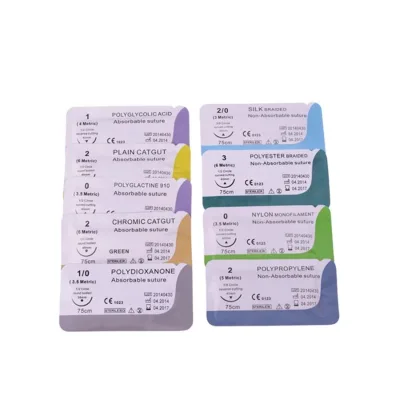
Procurement professionals must first distinguish between absorbable and non-absorbable reverse cutting sutures, as the supplied data indicates a market offering both distinct categories under the same product name. Buyers should verify the specific material composition, such as Nylon or synthetic blends, to ensure the suture aligns with the intended surgical procedure and tissue healing requirements. The observed listings confirm that customization is available for needle size and thread dimensions, allowing for tailored solutions in complex operations.
The commercial landscape for these surgical supplies reveals a significant variance in minimum order quantities, ranging from 300 to 12,000 units depending on the specification. This wide range necessitates careful inventory planning, as smaller orders may incur higher per-unit costs while bulk purchases require substantial capital commitment. Buyers must also account for the individual packing formats, which often include single aluminum foil bags within larger cartons, to ensure sterile integrity is maintained throughout the supply chain until the point of use.
Product Scope and Observed Listing Signals
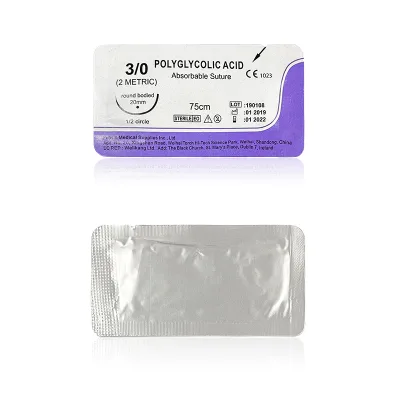
The observed product listings highlight a diverse range of suture types, including specific configurations like 910 taper cutting needles and round bodied options, which are critical for different tissue penetration needs. Buyers should scrutinize the listed thread sizes, which span from USP 2/0 to USP 4/0, to match the precision required for delicate cosmetic procedures versus robust surgical repairs. The presence of multiple needle shapes, such as 1/2 circle and 3/8 circle, indicates that suppliers offer versatile inventory to support various surgical specialties.
Listing signals also reveal that products are often marketed with specific color codes, such as green or violet, to aid in visibility during operations. However, buyers must be cautious as some entries list conflicting attributes, such as both absorbable and non-absorbable classifications, suggesting that product descriptions may vary by specific model number rather than a universal standard. It is essential to cross-reference the model number, such as OS10019 or USP6/0-USP2#, with the actual physical product to avoid receiving the wrong suture type for a critical procedure.
Technical Specifications to Verify
Technical verification begins with confirming the needle geometry and thread diameter, as the data specifies exact measurements like 48mm or 36mm lengths for various needle types. Buyers must ensure that the reverse cutting edge is properly engineered to prevent tissue tearing, a common requirement for skin closure and general surgery applications. The observed specifications include detailed dimensions for needle curvature and length, which directly impact the surgeon's ability to maneuver the suture in tight anatomical spaces.
Shelf life and sterilization methods are equally critical technical parameters that require immediate validation before any procurement decision is finalized. The supplied facts indicate a shelf life of three years and the use of Ethylene Oxide Sterilization, which are standard for maintaining sterility in medical environments. However, buyers should also verify the specific sterilization batch records and ensure that the packaging, described as single aluminum foil bags, remains intact to prevent contamination prior to the surgical event.
Compliance and Safety Documentation
Regulatory compliance is a non-negotiable aspect of sourcing surgical sutures, with the observed listings citing CE and ISO certifications as primary quality markers. Buyers must request valid certificates that correspond to the specific model numbers being purchased, as the data suggests that standards like GB/T18830-2009 may apply to certain product lines. It is imperative to confirm that the supplier holds current certifications for the specific manufacturing facility, ensuring that the quality management system meets international safety requirements.
Safety documentation must also address the tissue response characteristics, which are listed as small in the provided data, indicating a design intended to minimize inflammation. Procurement teams should verify that the product structure, described as multi-strand non-absorbent in some entries, aligns with the safety profile required for the specific surgical application. Additionally, buyers should ensure that the supplier provides clear labeling regarding the disinfecting type, such as ultraviolet light or ethylene oxide, to confirm the sterility assurance level meets hospital protocols.
Cost Drivers and Commercial Terms
The cost structure for reverse cutting surgical sutures is heavily influenced by the minimum order quantity, which ranges from 300 to 12,000 boxes per specification. Buyers must calculate the total landed cost, including shipping and handling, as the observed delivery times of 1-5 days suggest a logistics network that may vary in efficiency depending on the destination. Understanding the pricing tiers associated with different order volumes is essential for budgeting, as the per-unit cost often decreases significantly with larger bulk purchases.
Commercial terms also include the availability of samples, which allows buyers to physically inspect the product quality before committing to a large order. The data indicates that samples are offered, providing an opportunity to verify the needle sharpness, thread strength, and packaging integrity. Buyers should negotiate clear terms regarding the sample cost and lead time, ensuring that the evaluation process does not delay the overall procurement timeline for critical surgical supplies.
Supplier Qualification and Quality Control
Supplier qualification requires a thorough review of the manufacturing origin, with the observed data pointing to Hebei, China, as a primary production hub. Buyers should assess the supplier's capacity to maintain consistent quality across different production batches, given the wide range of specifications and model numbers available. It is crucial to verify that the supplier has a robust quality control system in place to manage the transition between different suture types, such as absorbable and non-absorbable variants.
Quality control protocols must also include a review of the product packaging and labeling accuracy, as the data lists multiple packaging configurations like 12 pieces per box or 600 pieces per carton. Buyers should implement a receiving inspection process that checks for physical damage, correct labeling, and sterility indicators to ensure that the product meets the required standards upon arrival. Establishing a clear communication channel with the supplier for any quality issues is vital for maintaining the integrity of the surgical supply chain.
Long-Term Procurement Checks
Long-term procurement strategies should focus on maintaining a stable supply of reverse cutting sutures by monitoring the supplier's ability to meet fluctuating demand. Buyers must regularly review the supplier's inventory levels and production capacity to prevent stockouts, especially given the specific nature of surgical supplies that cannot be easily substituted. Establishing a relationship with a supplier that offers customization for needle and thread sizes can provide a competitive advantage in meeting unique surgical requirements.
Continuous monitoring of regulatory changes and standard updates is essential to ensure that the sourced products remain compliant with evolving medical regulations. Buyers should schedule periodic audits of the supplier's quality management system and verify that all certifications remain valid throughout the contract period. By maintaining a proactive approach to supplier management, organizations can ensure a reliable supply of high-quality surgical sutures that meet the rigorous demands of modern medical practice.
FAQs
What certifications do these surgical sutures hold?
These surgical sutures hold CE and ISO quality certifications. They also comply with the GB/T18830-2009 safety standard. This ensures the products meet international medical device requirements for surgical use. Buyers can verify these credentials to ensure regulatory compliance for their specific market needs.
Can I request custom logo printing on the packaging?
Yes, custom logo printing is available for these surgical sutures. The supplier offers OEM services for needle size, thread size, and packaging. This allows buyers to brand the individual aluminum foil bags or boxes. It supports private label strategies for medical distributors and hospital procurement teams.
What is the minimum order quantity for these sutures?
The minimum order quantity is 300 boxes per specification. This baseline allows for flexible initial procurement. Larger orders can reach up to 12,000 units depending on the specific product model. This range accommodates both small clinics and large hospital supply chains seeking bulk surgical materials.
How are these surgical sutures sterilized and packaged?
These sutures undergo Ethylene Oxide Sterilization to ensure safety. They are packed in individual aluminum foil bags within boxes containing 12 pieces. The outer carton holds 600 pieces. This multi-layer packaging maintains sterility and protects the non-absorbent multi-strand structure during transit and storage.
What sizes and USP ratings are available for these sutures?
Available USP ratings range from 2/0 to 4/0, with some models covering 6/0 to 2#. Thread sizes include 75cm lengths. Specific needle configurations like taper cutting and round bodied are offered. This variety supports diverse surgical procedures requiring different tissue handling and strength characteristics.
What is the typical delivery time for these orders?
The typical delivery time is 1 to 5 days. This rapid turnaround supports urgent surgical supply needs. Stock availability is confirmed for many specifications. Buyers can rely on this quick processing for restocking hospital inventories or fulfilling immediate project requirements without significant logistical delays.